At My Choices Foundation, we believe that gathering social and behavioural evidence is essential for designing and improving programmes that are not only effective but deeply respectful of the communities they serve. It allows us to move beyond assumptions and uncover the nuanced realities such as beliefs, emotions, social norms, and decision-making patterns that shape human behaviour. This evidence becomes the compass for crafting interventions that resonate, adapt and empower. Whether through participatory storytelling, behavioural mapping or lived experience research, it ensures that our programmes are rooted in empathy, precision and agency.
To access the full report and detailed findings, please get in touch with us at [email protected]
ORA RESEARCH REPORT TO UNDERSTAND THE DRIVERS OF SEX TRAFFICKING
Decisions to sell or force a girl into trafficking or early marriage are rarely impulsive. They involve economic and emotional trade-offs shaped by enabling conditions and individual beliefs, even in similar contexts. Likewise, paying for sex is not an instant choice; it requires overcoming shame and guilt and is sustained through self-justifying narratives that normalize or excuse the exploitation. Understanding these underlying trade-offs and justifications is key to identifying levers for change. We commissioned Final Mile Consulting, a behavioural-research agency to research high-risk communities in the rural parts of India.
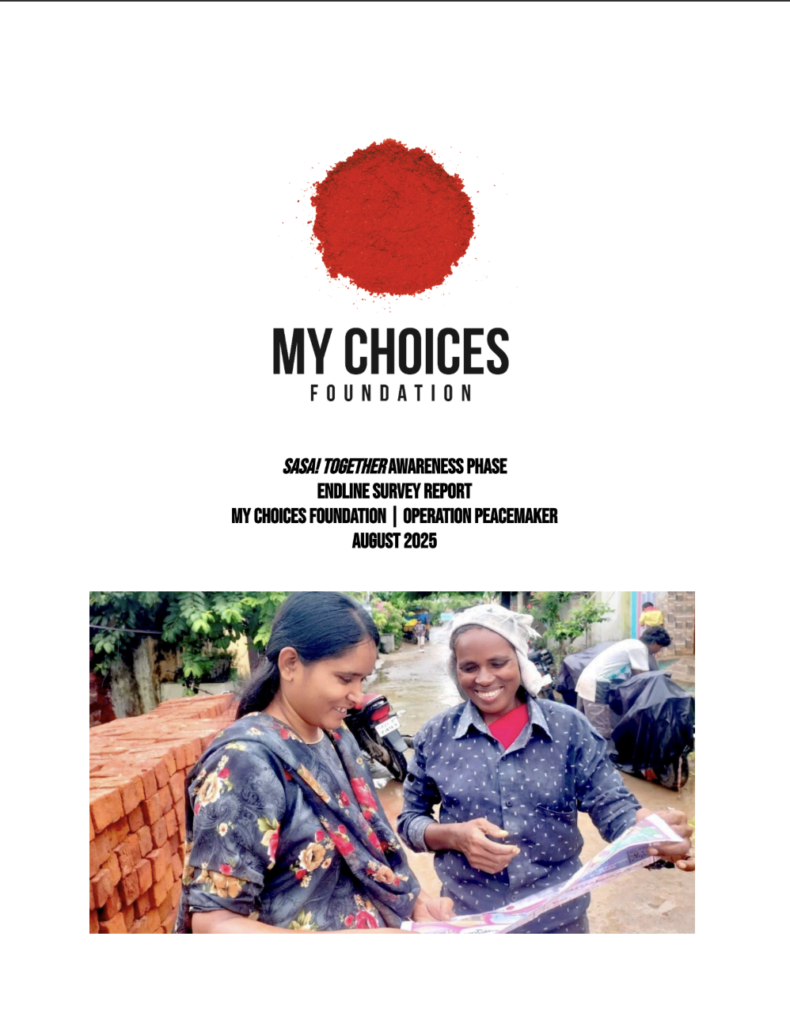
SASA! TOGETHER AWARENESS PHASE; ENDLINE SURVEY REPORT
The aim of the SASA! Together Awareness Phase is to deepen the analysis of men’s power over women and the community’s silence about it. By the end of this phase, community members will understand the different forms and root causes of violence and recognise that community silence is a major barrier to ending it. The Awareness phase moves a community through the contemplation stage of the Process of Change, in which community members begin to recognise violence against women as a problem.
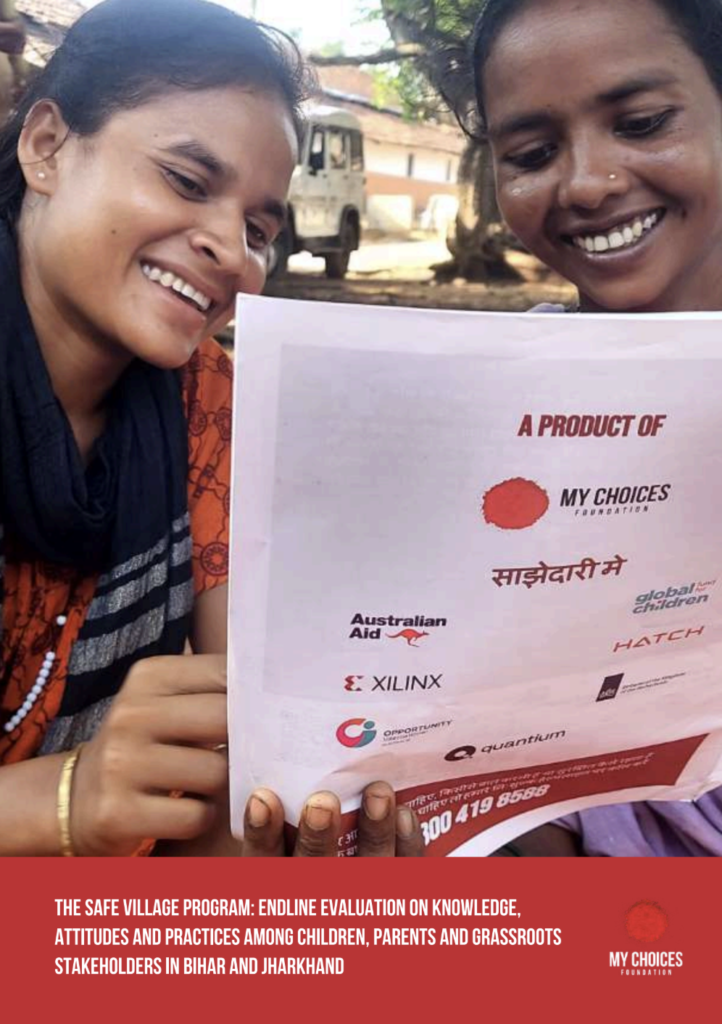
THE SAFE VILLAGE PROGRAM: ENDLINE EVALUATION
The endline evaluation was conducted to assess the effectiveness of the Safe Village Program in changing the knowledge, attitudes and practices of fathers, mothers, girls, boys and grassroots stakeholders regarding sex trafficking and its pathways such as child marriage, child labour, child sexual abuse, unsafe migration and online grooming. Findings informed the strengthening of the Safe Village Program, and also scaling into other villages and states in India.
OPM SOCIAL IMPACT STUDY
The study assessed the impact and relevance of OPM’s key programmes. It examined the long-term outcomes of the Counselling Programme and perceptions of OPM among police staff and leadership; the effectiveness of Lotus Safe Homes; the impact and sustainability of the Peacemaker Programme; the short-term effects of Youth Programmes on girls, families, and communities, including parental perceptions and shifts in social norms; and the role of Basti Meetings in shaping community leaders’ views of OPM and opportunities for collaboration.
ORA SOCIAL IMPACT STUDY
A two-stage, interdependent study was designed to generate actionable insights for ORA’s strategic course correction. The objectives were to assess: (1) the short- and long-term outcomes of the SVP among stakeholders, (2) its capacity to address trafficking across individual, community, and societal levels, and (3) its overall effectiveness to inform scale-up while sustaining impact and partnerships. A review of literature on human trafficking, interventions, and evaluation methods informed the study design.
Support us
We can’t thank you enough for all your support. Your generosity makes it possible for thousands of women and girls to make a choice to live a life free from abuse, violence, and sexual exploitation.